Preserving Natural Facial Movement: How Resilient Hyaluronic Acid (RHA) Adapts to Dynamic Expressive Zones

I’ve never found the goal of filler treatment to be “no movement.” If a patient smiles and every part of the face suddenly looks fixed, the treatment has missed something important.
Facial animation is part of facial structure. The forehead moves with surprise, the lips change shape during speech, the perioral skin folds with a smile, and the cheeks shift as expressions change. Treating these areas therefore requires more thought than simply choosing a gel with enough lifting capacity.
This is where resilient hyaluronic acid, or RHA, becomes interesting. The concept behind RHA fillers is less about making HA softer for its own sake and more about creating a gel that tolerates repeated deformation while retaining enough structure to correct a wrinkle or fold. Teoxane describes its RHA technology as being designed around facial movement, with a manufacturing approach intended to preserve longer HA chains and reduce the degree of modification compared with some conventional crosslinked gels.
For an injector, that distinction matters most in areas where the face refuses to stay still.
The problem with treating a moving face like a static surface
A wrinkle seen at rest isn’t necessarily the same problem as a wrinkle produced by expression.
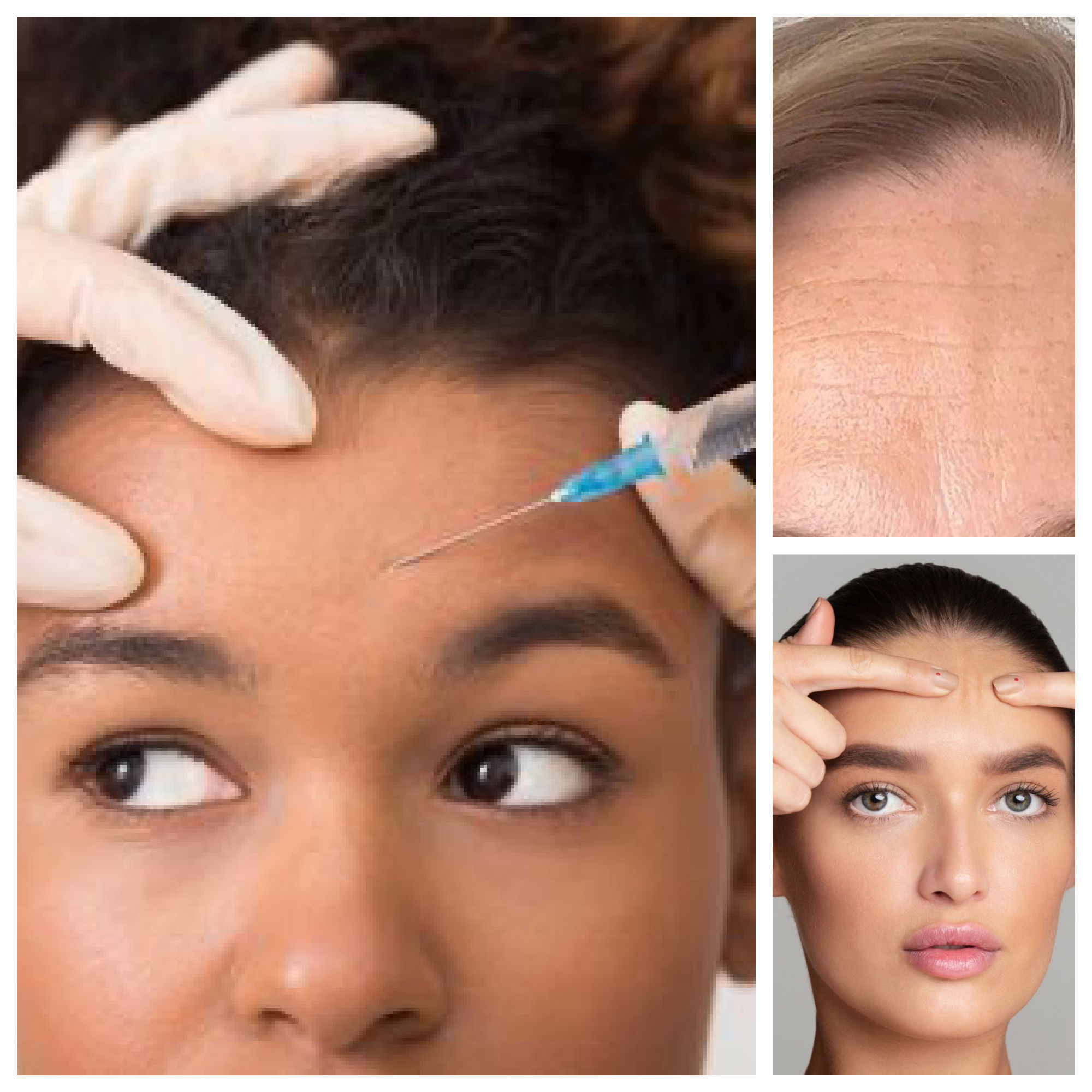
Consider a patient with moderate horizontal forehead lines. At rest, the lines might look relatively shallow. During brow elevation, they deepen considerably. A product selected solely because it fills a depression well at rest doesn’t automatically make sense for a surface undergoing repeated stretching and compression.
The same issue appears around the mouth. Perioral skin moves continuously during conversation, eating and smiling. The lips themselves are even more demanding. A material with excessive stiffness or inappropriate placement can alter the way the tissue moves, even when the initial contour looks good in a clinic mirror.
This doesn’t mean traditional HA fillers are unsuitable for dynamic areas. It means rheology, tissue plane, product selection and injection technique have to be considered together.
RHA was developed around this problem. Published clinical literature describes RHA gels as cohesive and dynamic, with rheological characteristics intended to accommodate facial animation. A recent randomized study of RHA3 also describes the material as having a balance between strength and dynamic stretch, rather than relying on rigidity to maintain shape.
That is a useful distinction. A dynamic filler still needs structure.

Resilience isn’t the same thing as softness
This is where product discussions often become oversimplified.
“Soft” and “flexible” aren’t interchangeable terms. A gel can have low resistance to deformation yet fail to provide the support or correction required in a particular anatomical plane. Conversely, a filler with stronger structural behavior can be appropriate in areas where projection and contour are the treatment objectives.
RHA technology is based on preserving a network of HA chains while using controlled crosslinking. Teoxane describes its Preserved Network Technology as a process intended to retain high-molecular-weight HA and create an interconnected structure with fewer modifications. The proposed result is a gel capable of stretching and recovering under facial movement rather than behaving like a rigid implant.
For clinicians, I think the practical takeaway is more useful than the marketing language: don’t select a filler by softness alone.
Ask what the tissue is doing.
If the area stretches substantially during expression, a product with dynamic behavior deserves consideration. If the treatment requires projection or stronger structural support, a different rheological profile might be more appropriate. And if the problem is primarily skin quality rather than a discrete volume deficit, injecting more filler isn’t necessarily the answer.

Where RHA fits in a treatment plan
RHA isn’t one product with one behavior. The range contains different formulations intended for different indications, so the injector still has to match product characteristics to anatomy and treatment objective.
Teoxane’s professional information describes the RHA range across indications involving superficial lines, moderate wrinkles, deeper folds and contouring.
A practical way to think about selection is:
| Clinical situation | Primary question | General product consideration |
| Fine superficial lines | Is the concern mainly texture and fine wrinkling? | Finer, more superficially appropriate HA behavior |
| Dynamic forehead or glabellar lines | How much movement occurs during expression? | A dynamic filler with suitable rheology and conservative placement |
| Perioral lines | Will the tissue repeatedly compress and stretch? | Flexible behavior with careful depth and volume control |
| Lips | Is the objective definition, subtle volume, or structural change? | Product and technique should follow the specific goal |
| Cheek or facial contouring | Is support or projection required? | Greater structural capacity may be appropriate |
This framework isn’t a substitute for the product’s local instructions for use. Indications differ by market, and treatment should follow the approved labeling and the injector’s training.
For clinics sourcing injectable HA products, product selection also needs to sit alongside provenance and storage. If you’re comparing professional options and want to review the available product information, formulations and clinical details before making a purchasing decision, you can buy Teosyal wholesale through a professional wholesale platform. The page also provides information on its Profhilo® range, including H+L, Structura and the Profhilo® Body Kit, so it is better viewed as a product-sourcing and comparison resource rather than as a recommendation that one injectable is suitable for every dynamic facial indication. The important point is to verify the exact product, indication, market authorization, packaging and storage requirements before clinical use.
That last step sounds mundane. It isn’t.
Counterfeit and improperly sourced injectable products create a completely different risk profile from choosing between two legitimate HA formulations. The FDA specifically advises healthcare professionals to inspect dermal filler packaging for authenticity and to use products appropriate for their approved indications.

Technique still decides a lot
A well-designed gel can’t compensate for poor anatomy assessment.
The forehead is a good example because it has traditionally been treated cautiously with injectable fillers. The vascular anatomy is complex, and the consequences of an intravascular injection can be severe. The FDA lists vascular occlusion among the most serious complications associated with dermal fillers, including tissue necrosis, visual impairment and stroke.
So the appeal of a dynamic HA shouldn’t encourage aggressive correction.
I prefer the opposite mindset. If movement is the clinical problem you’re trying to preserve, excessive product defeats the purpose. Small changes, appropriate depth, conservative volume and repeated assessment often make more sense than trying to erase every visible line in one appointment.
The same principle applies around the eyes and mouth. Dynamic areas punish overcorrection. Swelling can temporarily distort the result, while excessive product can affect tissue behavior long after the initial procedure.
Technique also changes how a filler behaves clinically. Published research on HA fillers shows that injection depth, volume, needle or cannula choice and injection method all influence outcomes and complications.
So when someone says, “RHA is flexible,” my next question is always, “At what depth, in what tissue, at what volume, and for what indication?”
The material doesn’t get to answer those questions for you.

When RHA makes sense, and when it doesn’t
RHA is particularly interesting when the aesthetic objective involves maintaining facial expression while softening a visible line or fold. It makes less sense to treat the technology as a universal answer for facial laxity.
For example, mild laxity caused by declining skin quality isn’t necessarily a filler problem. A patient with significant structural volume loss may need a deeper treatment strategy. A patient with strong muscular activity might benefit from neuromodulation rather than filling the resulting line. Someone with substantial tissue descent might need an entirely different discussion.
That distinction is important because “dynamic wrinkle” and “skin laxity” are often lumped together.
They aren’t the same.
A dynamic wrinkle is influenced heavily by repeated muscle activity. Skin laxity involves changes in dermal quality, collagen and elastin, fat compartments and structural support. HA filler can address selected aspects of the visible result, but it doesn’t reverse every biological component of facial ageing.
And filler safety doesn’t disappear because the product is HA. The FDA notes that dermal fillers carry risks including swelling, bruising, infection, nodules and, rarely, vascular complications with potentially permanent consequences.
A few selection mistakes worth avoiding
The mistakes I see conceptually are usually predictable.
First, choosing a filler because it sounds “natural” without examining its actual rheological properties and approved indication.
Second, assuming every RHA product behaves identically. Different formulations within a range have different intended uses.
Third, treating a wrinkle visible at rest without asking what happens during expression.
Fourth, using volume to compensate for a problem caused primarily by muscle activity or skin quality.
And finally, treating product sourcing as an administrative detail. For injectable medicine, authenticity, traceability, storage and regulatory status belong in the clinical decision.
The useful question is what happens when the patient moves
The strongest argument for RHA isn’t that it makes facial filler invisible. No injectable deserves that promise.
The more interesting question is whether the material and technique remain compatible with the mechanical behavior of the tissue being treated.
A patient’s face isn’t a photograph. It stretches, folds, compresses and rebounds thousands of times a day. The filler has to coexist with that movement rather than fight it.
That’s why dynamic facial zones demand a different level of judgment. The best result isn’t necessarily the smoothest face at rest. It’s the face that still looks like itself when the patient laughs.
xoxo


