What the Label Inside Your Clothes Actually Tells You
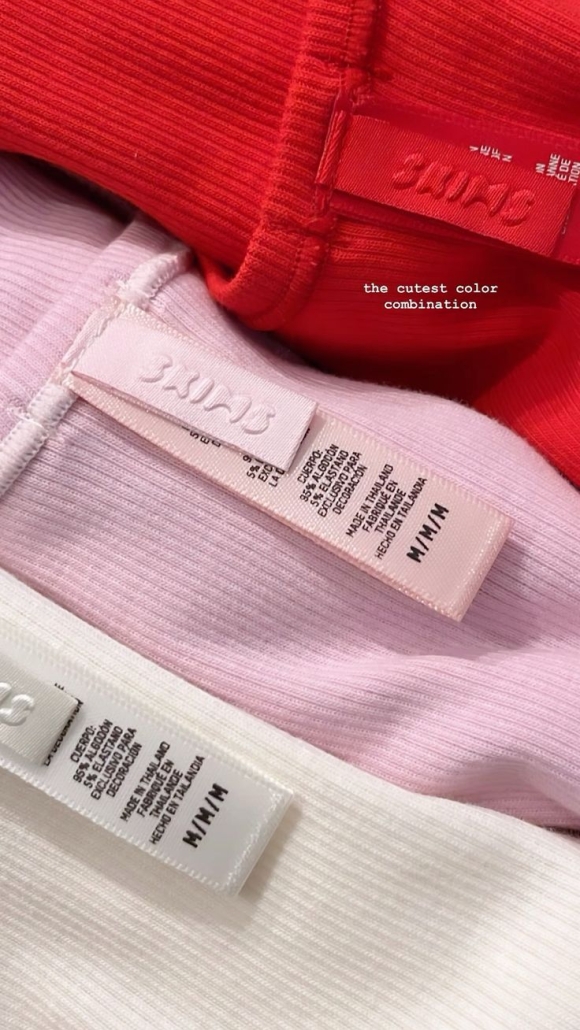
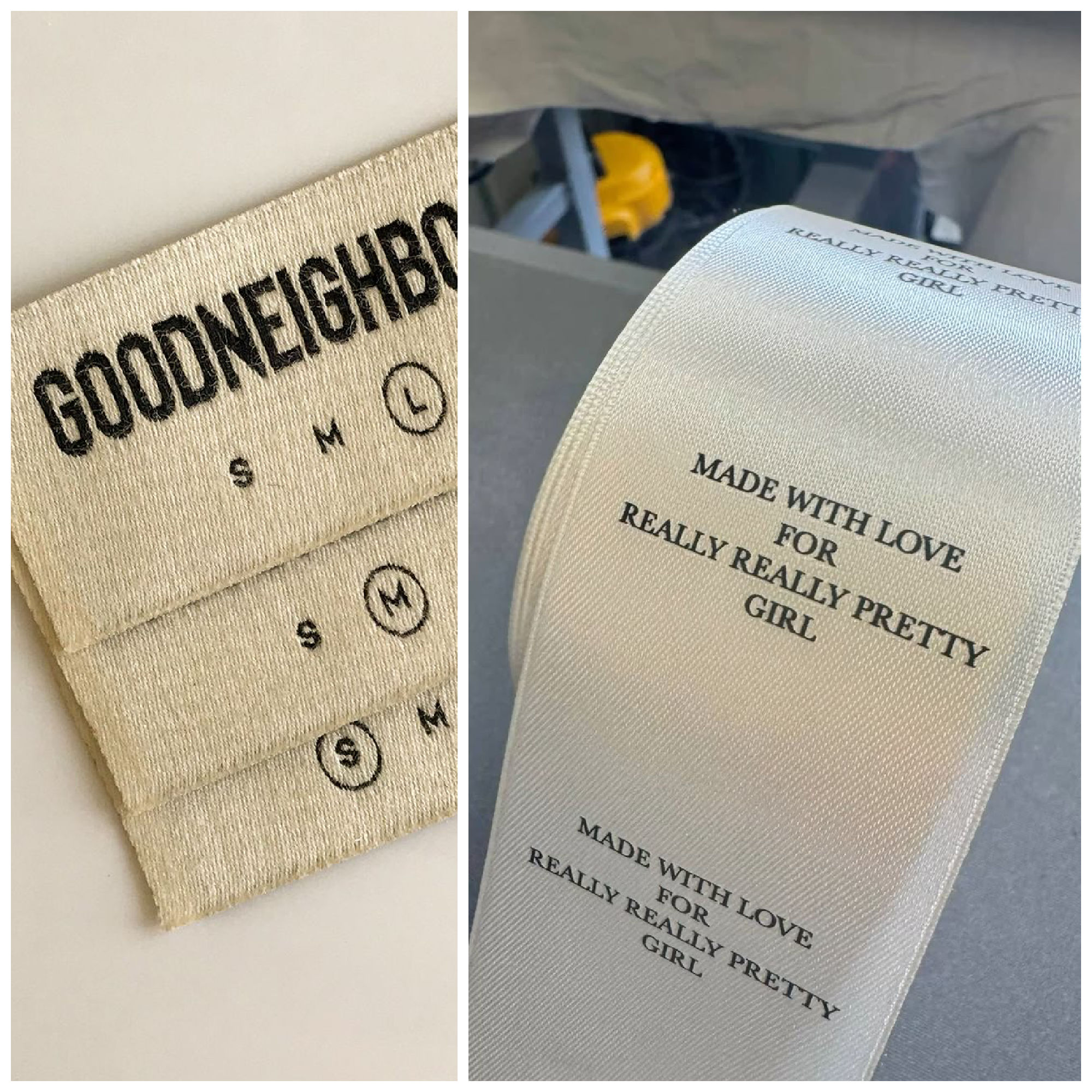
Most of us cut them out. That scratchy little tag at the back of the neck, the one that rides up during dinner, gets snipped off somewhere in week two of owning a garment. Which is a shame, because before it annoys you, that label is doing a surprising amount of work.
Labels are one of the last places in fashion where craft, regulation and branding all sit on the same square centimetre of fabric. Once you know what to look for, you can read a lot from them.
Woven, printed, or transferred
There are three main ways a label gets made, and they feel completely different in the hand.
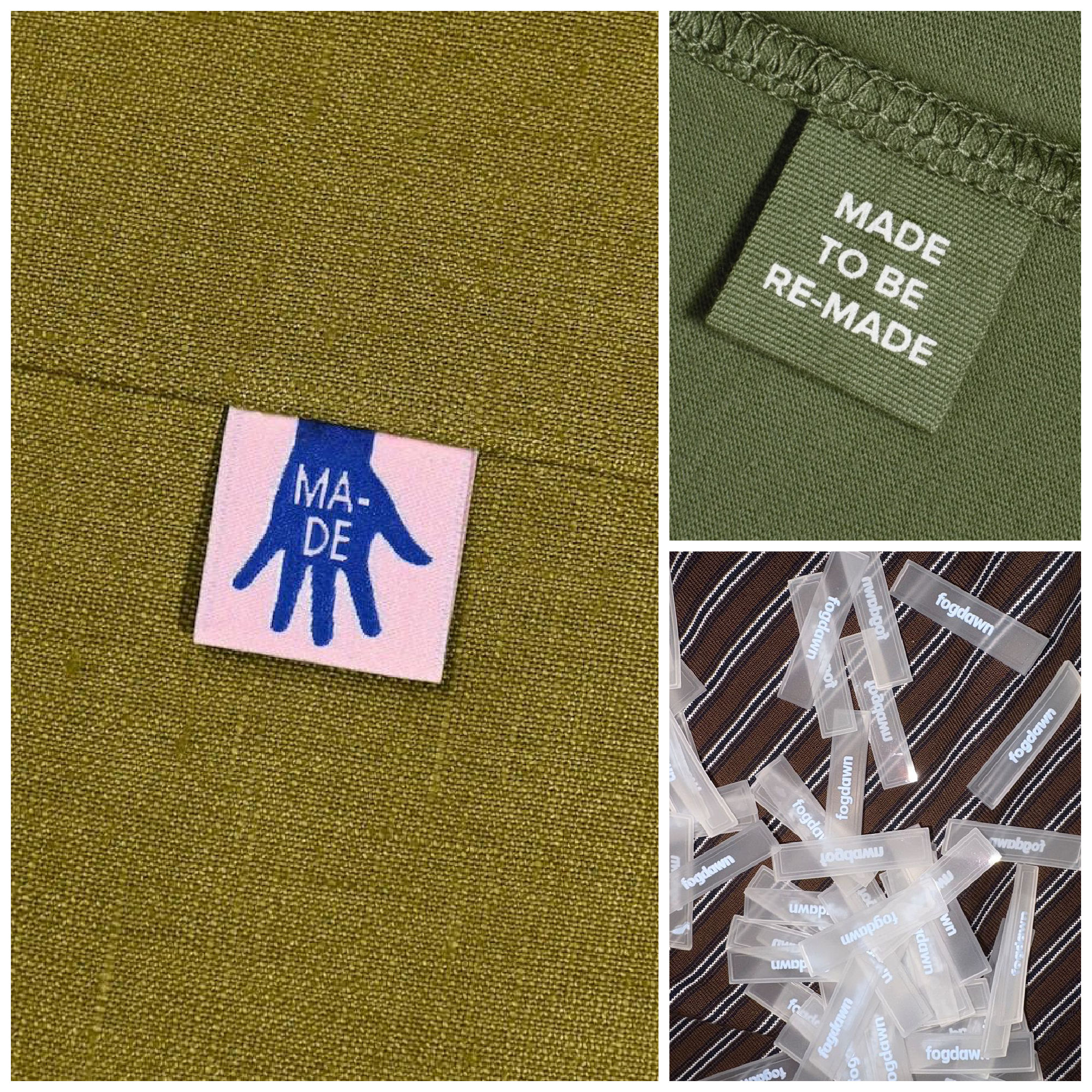
Woven labels are produced on a Jacquard loom, where threads are interlaced to form the design itself. The logo is not sitting on top of the fabric, it is part of it. That is why woven labels survive years of washing while the garment around them fades. It is also why they tend to have that slightly raised, textured feel when you run a thumb over them.
Printed labels apply ink or a heat transfer to a soft base material such as satin, cotton or Tyvek. They handle fine detail, gradients and multi-colour artwork better than weaving does, which is why brands with intricate logos often go this route. The trade-off is durability: print sits on the surface, and surfaces wear.
DTF and heat-transfer labels are the newest option and the softest against skin, which is why you see them a lot in activewear. No stitched edge, no scratch, no tag to cut out.
Care labels are not just legal small print
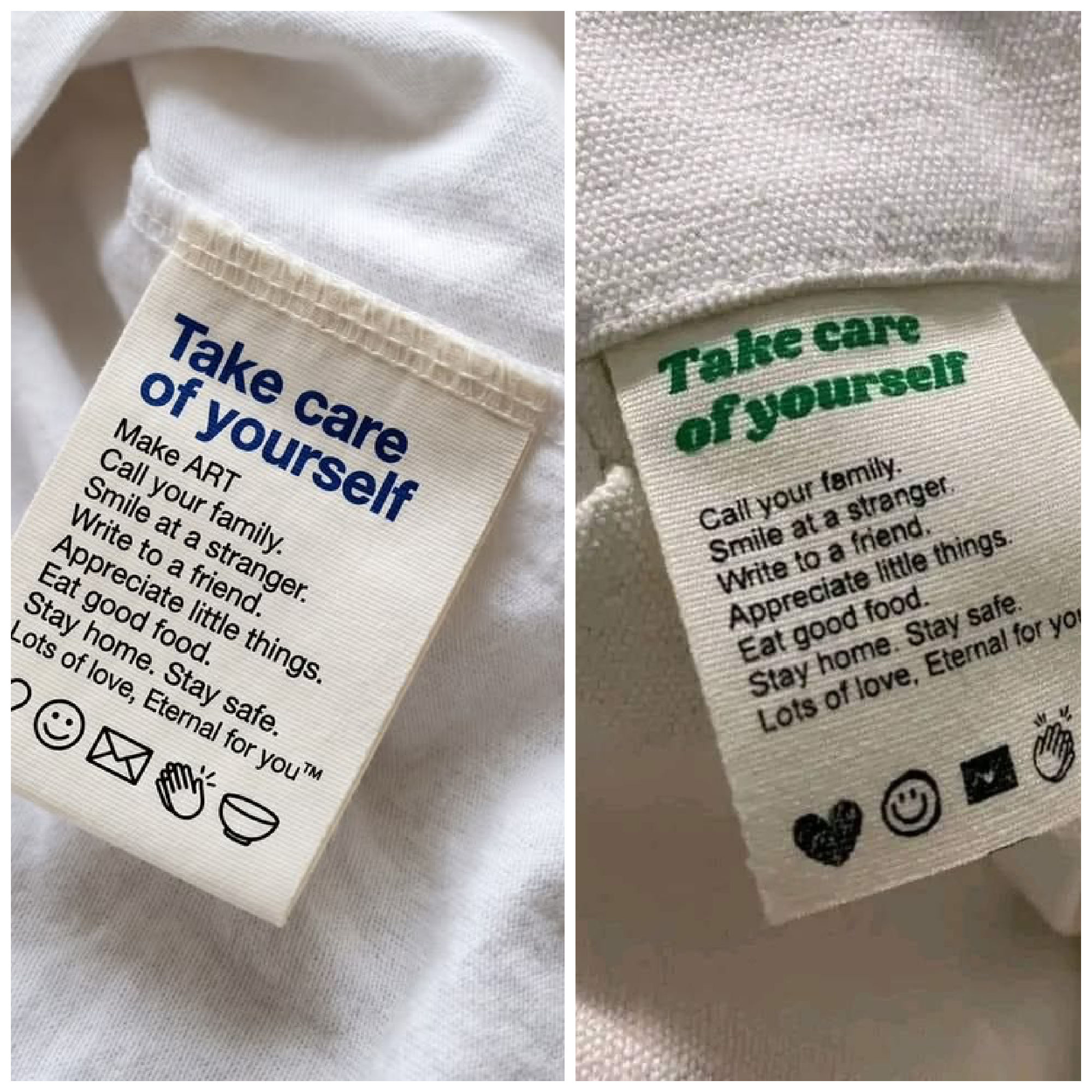
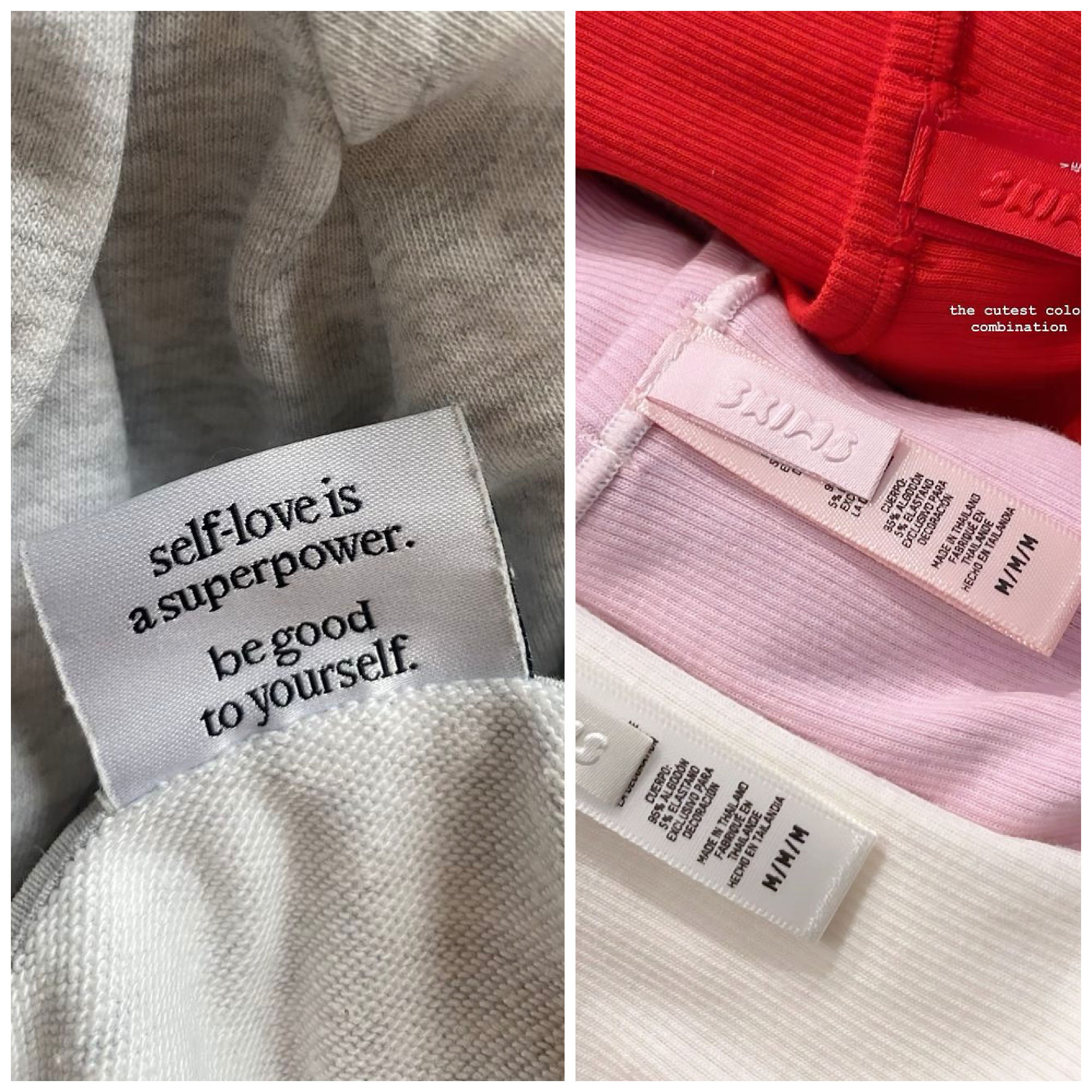
The second label, the long thin one with the symbols, is the one people ignore entirely. It is also the one that determines whether your garment survives its first year.
Care information is required in many markets, which means brands cannot skip it. But the amount of thought that goes into it varies enormously. A well-made care label lists fibre composition accurately, uses legible symbols rather than a wall of tiny text, and is printed on something that stays readable after fifty washes. A cheap one is illegible by month three, which is exactly when you need it.
There is a practical reason to care. Fibre composition tells you far more about how a garment will age than the price tag does. A wool blend with a high synthetic content will pill. Viscose will lose its shape if you hang it wet. None of that is on the swing tag in the shop, but it is always on the care label.
The quietest signal a brand sends
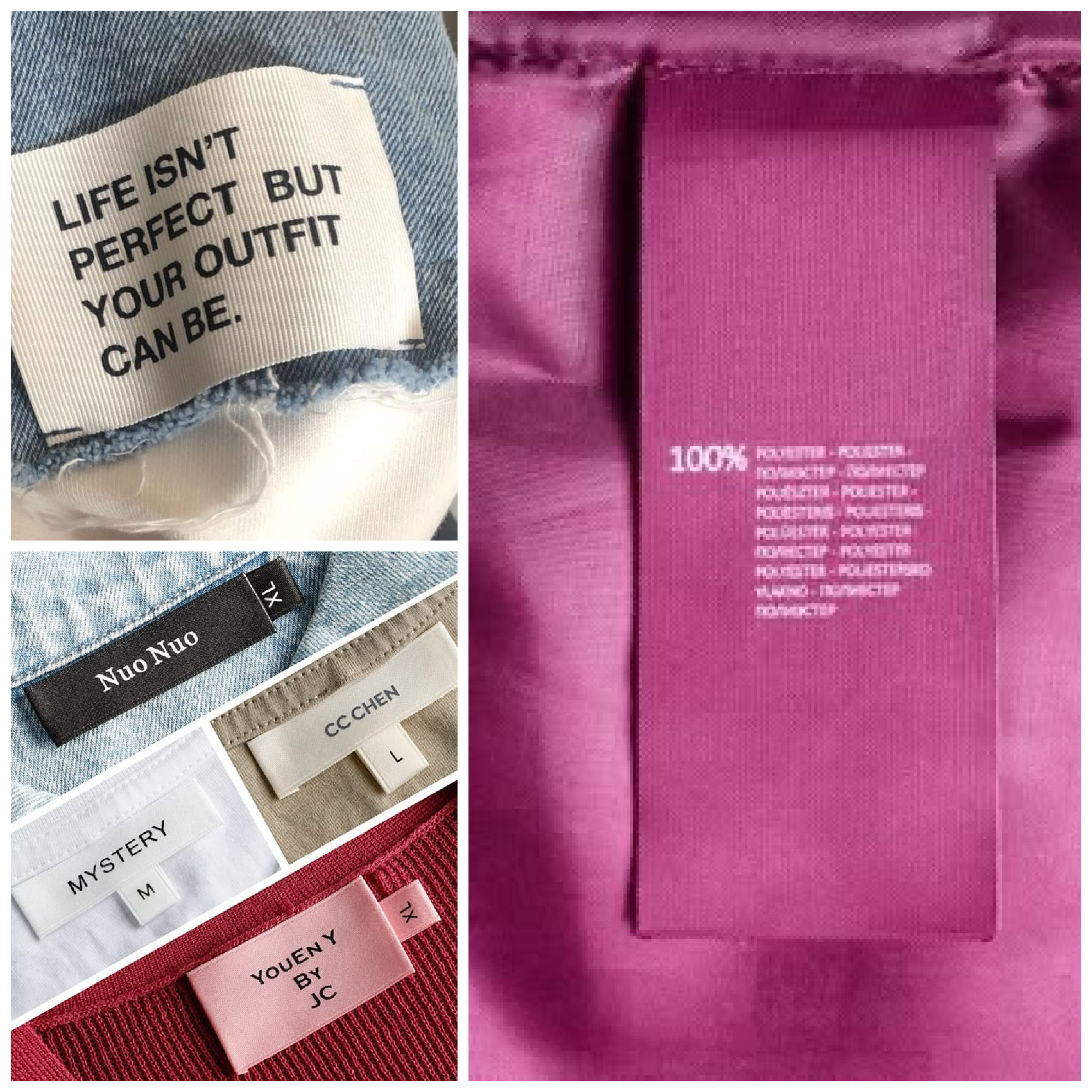
For smaller labels and independent designers, the woven tag is often the first thing a customer touches that was not the garment itself. It is also one of the cheapest ways to look established.
Suppliers like Dutch Label Shop have made that accessible in a way it simply was not fifteen years ago, when custom labels meant minimum orders in the thousands. Small runs are now normal, which is why so many independent makers can put a proper woven tag in a twelve-piece collection.
You can see the thinking in the details. Where the label sits, whether it is a loop fold or a centre fold, whether the brand uses a hidden interior label instead of a neck tag because they know people cut those out. Those are all deliberate decisions, and they say something about how much attention went into everything else.
Worth a second look when buying vintage
Labels are also the fastest way to date a second-hand piece. Typefaces change, care symbol standards change, country-of-origin conventions change. Serious vintage buyers can place a garment within a decade from the tag alone.
So next time something arrives, resist the scissors for a minute. Read the thing first. It will tell you how to keep the garment alive, roughly what it is made of, and quite often how seriously the brand takes its own work.
 xoxo
xoxo